In the beginning, part 3

St. Francis in old church No one can say for sure why so many people— young people, especially— began flocking to the little church in Taize to pray with Roger and the Brothers, but come they did, Catholics and Protestants alike. Within two years, there were 12 Brothers living in the house in Taize. Roger felt they should “be signs of Christ’s presence” outside the small village as well, and so two Brothers were sent to live in a nearby mining town, to work the mines with the people and to help in their struggles. As the community grew, more Brothers were sent out, even to the ends of the earth. And still the young people came, so many that they were spilling out of the little church, beyond the courtyard and down the road. Despite Brother Roger’s vision of forming a small community of men who would live out the Gospel in prayer and silence, he had to accept the fact that the Holy Spirit seemed to be leading them in a different direction— based in community, to be sure, but somehow growing to serve the seekers and believers who kept appearing.

As it happened, one of the new Brothers had been an architectural student before taking his vows at Taize, the first monastic order of the post-reformation era. He designed what would become The Church of Reconciliation to be built on an adjoining parcel of land, the funds for which were supplied by a German group that was formed to rebuild areas destroyed by the war, a group whose name meant literally, “sign of atonement/reconciliation.” Although the church was magnificent in its beauty and simplicity, Roger hated it. Felt the bigness of it went against everything he believed in. Struggled to reconcile his own vision for a small community with this massive ark-like tabernacle. The church was dedicated in 1962, and within a year, the space was filled to capacity. A decade later, even the massive church was not enough for the steady stream of young people who came not only from Europe, but America and Asia and Africa. In 1971, with Easter fast approaching and reservation requests coming in by the hundreds, the Brothers were faced with a hard choice: turn the young people away, or make more room. “With sledgehammers in hand,” writes Jason Brian Santos, “the brothers tore down the [back] wall and in its stead erected an old red-and-white striped circus tent,” that would open up the church and accommodate all who came. This tent has now become home to the adult meals and Bible studies as the church itself has been reexpanded with a new adaptable design that can grow to hold up to 6,000 worshippers on festival days such as Easter and Pentecost.

FAther Roger's grave

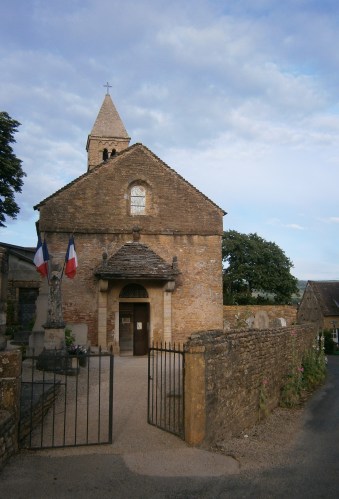
After praying in the little Romanesque church where Brother Roger is now buried, I walked back up the road past the Welcome Center, through the young people’s meal area, and onto the Church for the evening prayers. I could still feel the cool stone and the musty air in the space where a few humble and devout men had helped build a seemingly impossible bridge. But to where? Back home, when I visit Saint Andrew’s Abbey, as much as they love me, and as much as they wish it were not the case, they are not allowed to serve me, a non-Catholic, communion. Divisions prevail, and they can’t. They mustn’t. There are too many other bridges that need building.

I knelt on the floor and sung that night what we become one of my favorite Taize chants The Kingdom of God is justice and peace and joy in the Holy Spirit. Come, Lord, and open in us the gates of your kingdom . I watched the Brothers as they glided in in their white robes, each with their individual callings, each from different denominations, each taking vows that allowed them to hold onto their roots— and to honor the roots of the other— while stripping their common faith down to the essentials, to the Gospel of love, mercy, compassion, joy and trust. This is how the impossible becomes possible, I thought. If they can do it, why can’t we?
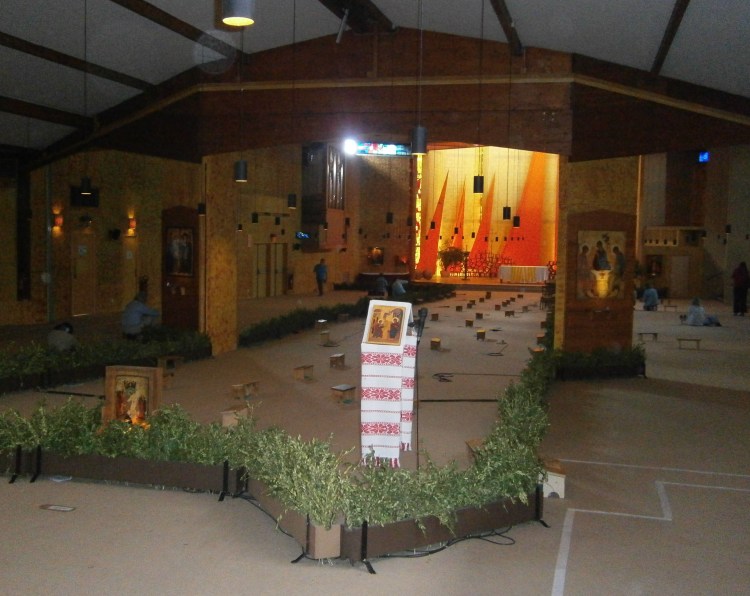
Taize Church, empty, side angle

Based on excerpts from “A Community called Taize” by Jason Brian Santos.
In the beginning, part 2

First church in TaizeDaring to live a life of joy, simplicity, and mercy can be risky business. Two years after Brother Roger moved to Taize, the Gestapo became suspicious about his activities. While he was helping a refugee escape to Switzerland, his home was raided and friends encouraged him not to return for awhile. He used this time to finish the thesis he’d abandoned while heading up a small Christian organization at the university in Lausanne (In the beginning). The thesis was summarized in a pamphlet that was soon read by other like-minded men. Before long there were three more who “dedicated themselves to a common life that included communally shared property, daily work and prayer, a common purse, and celibacy,” says Jason Brian Santos, author of A Community called Taize. In the autumn of 1944, when France was finally liberated, Roger and his three Brothers moved back into the house in Taize, amidst rubble and despair, and became a source of light and hope through their simple practice of living out the Gospel.

Of all the visitors they accommodated, perhaps the most radical were the Roman Catholic priests who began joining them in the upper chamber of the house for thrice-daily prayer. Roger finally asked a local church authority if they might used the small, abandoned Catholic church down the lane for worship: permission was granted, then quickly rescinded. But Roger had a quiet tenacity about him. He took the matter to the Bishop of Autun, who turned it over to the desk of the papal nuncio in Paris, who granted the wish of these protestants brothers to praise God in a church that was built for Catholics. This was something of a miracle, but still, to Roger’s mind, it was incomplete: permission was granted for the protestants to worship there, but not for any practicing Catholic to join them.

As an American born and raised in L.A., where going to church at all is considered weird, and where Catholics and Protestants are like blood relatives compared to the current landscape of spiritual practices, so many of these Catholic/Protestant distinctions seem like ancient history. But there in Taize, the impact of the Reformation was still palpable. Even in this place of Reconciliation, the church in which we all gathered for prayer each day was divided by side— Catholic on the left, Protestant on the right— so that those who believed in closed communion could receive the Eucharist from a clergy member of their own faith. My aunt and I didn’t find out about the two sides til three days into the trip. I had to laugh, as I had been moving all around to see things from different vantage points, assuming that every pilgrim there was voicing their support for open communion across all possible lines by their very presence. Many were, maybe even most. But respect was shown for those who were not.

This respect is evident in everything that Brother Roger did as he spent his life working towards ecumenism in the church, a concept to him that was not so much about tolerance but reconciliation, a much more demanding challenge. Like all great change agents, he was a master of the baby step. I can only hope that at some moment in my life I might be able to approach a situation with this sort of insistent grace. Determined that reconciliation would begin right there in the little Romanesque church in his newfound home, he returned to petition Pope Pius XII. And this is what Roger said:

“Leave a little way open, even a very narrow one and define what you consider to be the essential barriers— but leave a way forward. Do not close it altogether.”

Within a matter of years, the Pope transferred the authority to each individual Bishop to grant Catholic participation in ecumenical assemblies. And there in Taize, protestants and Catholics did, indeed, praise their Lord as one together.

Big, beautiful, baby steps.

In the beginning…

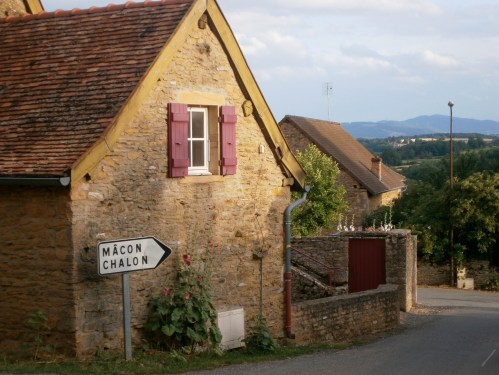
Taize village with signAfter supper I took a walk down the lane past the Welcome Center and round the bend where the town of Taize— with its cobblestone walls and bursts of foxgloves and wildflowers— still lived and breathed, in no small measure due to the still, small voice in the heart of Brother Roger, the founder of the Taize community. As a college student in Switzerland, at a time when he was still wrestling between what seemed to be disparate futures as a writer or a theologian, he was asked to head up the Student Christian Association. He found it an odd request since he’d only been to one meeting and didn’t particularly like it, but he accepted, a curious assent that quickly led to the formation of his lifelong ideals. “He devised a series of Bible Studies that focused on the foundation of faith and prayer as a means to search for God,” according to Jason Brian Santos in his book A Community Called Taize. Stephan had recommended the book to me when we checked in. “He’s an American writer, too!!”

Soon the young Swiss college group grew and within a year there were twenty students meeting regularly for prayer, silence, meditation and confession; Roger had stripped his protestant faith down to the core, focusing only on what it meant to lead a Christ-centered life in community with others. He began dreaming of a house where this might be lived out and, at the end of the war, he found that is was time. “The defeat of France awoke powerful sympathy,” Brother Roger wrote years later. “If a house could be found there, of the kind we had dreamed of, it would offer a possible way of assisting some of those most discouraged, those deprived of work; and it could become a place of silence and work.”

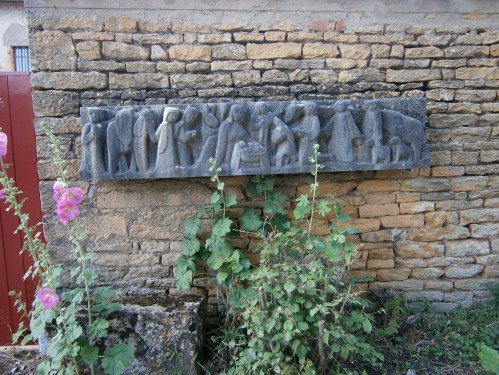
Cobblestone and flowers

Young Roger tried to get people from his school community to join him but they declined. And so he set out on his bicycle, riding through the Burgundy region of France where many refugees— particularly Jews— were fleeing. After a visit to the monastery in Cluny, he heard about a nearby town called Taize. It was a sad and desolate village. An old woman who lived in one of the homes showed him the property that was for sale. He stayed with her for a meal and when he shared his vision for a community of faith, she begged him to stay. He bought the house for a pittance and started a garden that would provide food for those who began to show up on his doorstep. And although he prayed three times a day, and sang hymns in the countryside nearby, he never asked the refugees to join him. Instead he wrote up a little pamphlet that described his understanding of what he was trying to do and be and the community he hoped to create. “Every day let your work and rest be quickened by the Word of God; keep inner silence in all things and you will dwell in Christ; be filled with the spirit of the Beatitudes: joy, simplicity, and mercy.”

monastic mural

Based on excerpts from Jason Brian Santos’ “A Community called Taize”

The blessing of one McNugget

After our group session, there was a workshop in the main building on the Holy Trinity so rich with connect-the-dots scripture references that all I can say is: you had to be there. My aunt and I then raced from there to the tent to prepare for dinner. After offering to help set up and serve the first day, this had become our assignment for the week (no cleaning toilets, yay!). The little van that drove the food trays from the main kitchen up to Tent F arrived in a cloud of dust. We unloaded the crates of bread and the large foil-covered tins of the meal. Peeling back one of the trays I saw we were having chicken McNuggets. “How many per person?” I asked.

“One.”

“One?” I repeated, wondering if it wouldn’t have been better to have none at all.

I was in charge of handing out the trays and bowls. I watched as my aunt and two others scooped out the carrots and peas and potatoes and then the solitary nugget. Most looked up incredulously, waited to be told, “Just one tonite.” There was a very round, garrulous man who was always first in line for seconds; I worried that he might be undone by the rations. “No, just one,” my aunt told him as his shoulders drooped and he reached for more bread.

He was the only obese person I saw during our entire week at Taize. In fact, it was startling to see how much trimmer and healthier most of the European and Asian visitors were; we have gotten so used to having so many obese citizens in America I don’t think we have fully understood how much our human landscape has changed. The week before I left for Taize, I saw a billboard announcing a 50-piece McNugget package for only $9.99. I thought about the struggling families who would make a dinner of it, then realized— no, this would likely become the new American afterschool snack.

When everyone had been served, Hesta and Anna— our permanent leaders— came around to serve us. Atop my scoop of carrots and peas and potatoes, Hesta gave me not one but two nuggets. An hour before I would have thought that was a delightful treat —a little bonus for our food service— but after 24 hours in Taize, I had come to feel uncomfortable with the idea of any special treatment. Why should I get an extra one, when everyone else had to make do. I thought of a moment in church that day when my aunt had sat down on a kneeler that had a scarf around the base. A woman arrived late and tapped her on shoulder: that one’s mine. It’s reserved. She had tried to find my aunt another one, but that wasn’t the point, at least not to me. There was a basic wrongness about holding a prime spot — or taking any action that placed one at an advantage over another— in this place of trust and reconciliation. If we are to began to bridge the gaps between us, we must be willing to meet on a level playing field.

I’d love to report that I’d put the nugget back, but I did not. What would have been the point? Everyone had been fed and there were still a few more for the few who needed seconds. Frankly, without the dipping sauces, they were almost inedible. Funny, how so many adults had felt deprived about something so wretched tasting. Sometimes I think we’ve just grown used to wanting more of everything, maybe most especially what we are told we can’t have.

Opting for Joy, part 2

And so we sat in our little circle on our metal folding chairs on the grass, me and my aunt and the salt-and-pepper Brits, and the Chinese couple from Malaysia, and Michael in his wheelchair and Rasmus his helper, and the handsome and slightly uncomfortable European man, whose infrequent comments revealed a vague confusion or disconnect with the thoughts that came before. I found myself drawing from my experience in leading groups throughout the years, trying to discern when a particular path had grown cold, to recognize when two divergent opinions might create an opportunity for growth, to cover the material assigned so as not to miss a segment that might have been dear to one person, and most of all, to make sure all had a chance to speak. In my concern for communicating with Michael, I realized I hadn’t given enough attention to the Chinese couple. Picking up on the line that “Individualism as a road to happiness is an illusion,” I asked the man about his culture. How in the Chinese culture the emphasis is on the strength of the group, on the family unit as a whole, not on the individual, isn’t that right?

“That’s changing,” he said. “Now our young want more to have their individuality. Even in the church we see it, the music becomes more about the personal experience of faith. Much more I,I,I.”

His wife nodded and I sensed it was not so much deference as shyness and, perhaps, less confidence in her English. Everyone could relate to this issue of how music reflected this shift in culture from the collective to the individual. I knew that I had experienced it when I first started going to church: all the worship songs at our contemporary service had lines like “Breathe new life in me” or “I love you Lord” or “Make me a servant”— all first person language— whereas the old church hymns put the emphasis on God and the whole. “A Mighty Fortress is our God” or “Voices raised to you we offer” or “God of Grace and God of glory, on your people pour thy power.” In the beginning the old hymns felt dead to me but as I have aged, and perhaps matured, they have begun to feel richer. I only wish they didn’t have so many bloody verses— my voice is shot after two.

By the end of the hour and a half, our group had come to be all that one could hope for: connected, engaged, willing to share (I would work more on the European man later). “Well,” I said, “Shall we close in prayer.”

“Gracious and Heavenly father, we thank you for this time together, for the sunlight and the warmth of kindred spirits, for the chance to learn from each other, and to grow in our understanding of the gift of joy and the fruit of compassion in this holy place together…” I opened it up to the circle and those who felt so moved added their own expression of praise, with Michael wittily throwing in the AMEN at the end. We all laughed and rose up and I found myself eager to meet again with the group the following day. “So, shall we make this our spot for the week, meet here tomorrow at 3:30?”

The two Brits said they were very sorry, but that they had to leave the next day just after lunch. The couple from Malaysian echoed the sentiment. In a blink the group had been lopped in half. When even the European man said he wasn’t sure if he would make it, I felt a sudden, gaping sense of loss, not only of the individuals who were leaving, who I’d grown to like very much and was hoping to learn more from, but of the sense of the whole; our group, my group. The people to whom I’d been called to be as one with.

With all the enthusiasm I could muster, I turned to Michael and Rasmus and my aunt and smiled. “Well, I guess it’s just us, then,” and drifted off wondering what God had in mind this time.