A visit to the The Seven Storey Mountain

I’m not sure why it has taken me so long to actually get to reading Thomas Merton’s autobiography. It became a best-seller upon its release in 1948 and has remained in constant publication since then, translated into 40 languages. Merton’s life began in France among artists, was lived out in a Trappist monastery in Kentucky, and ended in Bangkok where he was attending a conference to help find unity in the eastern and western spiritual traditions. Over the next few weeks I’d like to share some passages as I come upon them. Perhaps they will speak to you, as well.

The story begins like this:

“On the last day of January 1915, under the sing of the Water Bearer, in a year of a great war, and down in the shadow of some French mountains on the borders of Spain, I came into the world. Free by nature, in the image of God, I was nevertheless the prisoner of my own violence and my own selfishness, in the image of the world into which I was born. That world was the picture of Hell, full of men like myself, loving God and yet hating Him; born to love Him, living instead in fear and hopeless self-contradictory hungers….My father and mother were captives in that world, knowing they did not belong with it or in it, and yet unable to get away from it. They were in the world and not of it–not because they were saints, but in a different way; because they were artists. The integrity of an artist lifts a man above the level of the world without delivering him from it.”

–from The Seven Storey Mountain by Thomas Merton
Here comes the light

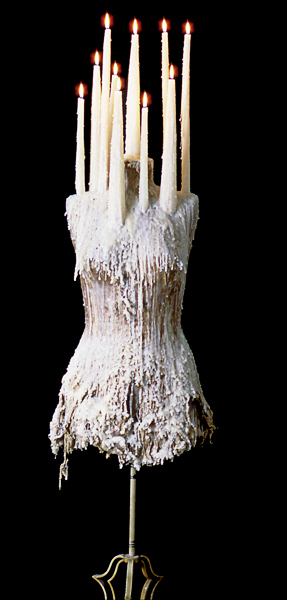
Heidi Petersen "Vigil"
Heidi Petersen “Vigil”

“Let your light shine before others, so that they may see your good works and give glory to your Father in heaven” (Matthew 5:16)

Becoming Flame

by Justyna Kopania
by Justyna Kopania

A reading from The Desert of the Heart, a collection of sayings from the 4th-century Desert Fathers:

Abba Lot went to see Abba Joseph and he said to him, “Abba, as far as I can, I say my little office, I fast a little, I pray and meditate, I live in peace and as far as I can I purify my thoughts. What else can I do?” Then the old man stood up and stretched his hands towards heaven; his fingers became like ten lamps of fire and he said to him, “If you will, you can become all flame.”

The Word

How Wonderful! I speak of the soul and
seven people rise from their chairs and leave the room,
seven others lean forward to listen.
I speak of the body, the spirit, the mockingbird,
the hollyhock, leaves opening in the rain, music, faith, angels
seen at dusk—and seven more people leave the room and are seen running
down the road.
Seven more stay where they are but make murmurous disruptive sounds.
Another seven hang their heads, feigning disinterest though their hearts
are open, their hope is high that they will hear the word even again.
The word is already, for them, the song in the forest. They know already
how everything is better—the dark trees less terrible, the ocean less hungry—
when it comes forth, and looks around with its crisp and lovely eye,
and begins to sing.

by Mary Oliver

The Golden Rule the World Over, 7

The Native American tribe known as the Pimas capture The Golden Rule this way: “Do not wrong or hate your neighbor. For it is not he who you wrong, but yourself.” Here we see the rule take a new twist into the area of blame and shame. The classic pointed finger with four pointing back at you. A parallel to Jesus’s command to “take the log out of your own eye so you can see clearly the speck in your neighbor’s.”

But this proverb is even more telling when it comes to the wisdom of The Golden Rule. The verse is attributed to the native Arizona tribe referred to as Pima. This moniker is believed to have come from the phrase pi ‘añi mac or pi mac, meaning “I don’t know” — the answer they often gave the Spanish missionaries upon their first meetings. “I don’t know,” the natives answered, and their honesty became a label, a slur, a category to place them under so that they would be considered less than. We all do it— in ways large and small—to individuals, groups, types. The other. We all know we shouldn’t, but we do it anyway. According to Pima wisdom this means, at the very least, we should feel guilty about it.

Do we? And are we willing to begin to catch ourselves and turn our pointed fingers around? And is that even the full of the wrong we do to ourselves when we wrong a neighbor? I suspect it’s more than that. I suspect what they are trying to teach us all is that hateful behavior shapes us. It turns us into hateful people, which makes our lives smaller and tighter until, ultimately, we are simply roiling with darkness and fear and anger, convinced that we had no part in it. Convinced that we are right.

The next time you notice yourself deriding a neighbor, a co-worker, a guy you see on TV, stop. Observe. Consider who you are really hurting. Consider what it would cost to not be so sure your thoughts, words, actions are right, and what you might gain by saying, simply, “I don’t know.”