Who are We Kidding?

HalsPoemCard

Just came back from a wonderful lunch at a great old Venice haunt where artists and locals of all stripes have gathered for the past 30 years. This little verse was displayed by every booth and, really, what’s not to love about it? It has all our favorite words: passion, dream, kindness, inspire, truth, love, and a healthy dose of our favorite modifier: your, which in these instructions means my. Breezing past this easy wisdom is like taking a shot of wheat grass juice—or tequila. Your choice.

Either way, that’s about how long the buzz of aphorisms like these will last—or help—over the long haul. Like when the love of your life has left you. When your dad has brain cancer or your mom has dementia or your baby has something wrong that no amount of wit or rank or determination can heal. When you’ve lost your job or your way and you find yourself disappearing more and more into a haze of booze or pills or sex because somehow—despite looking great in your yoga pants—your meditation practice is not bringing you peace. When you’re starting to suspect that it really might be you that is the source of your recurring troubles but don’t have a clue what to do about it.

In the land of sandwich board wisdom there is only one “hard” word even mentioned. Cry. Tucked in between laughing and loving it seems more like a salty reflex of living a fabulous life than anything anchored in real pain. But pain is a real thing. It’s not avoidable. Not even if your start-up becomes an IPO before your 30. Or your film gets Special Jury Recognition at Sundance. Or you figure out how to shed—even briefly—your incessant Fear Of Missing Out. Down the road, you’ll be forced to discover that there’s simply not enough Botox in the world to restore the infinite possibility of youth, or the primal rush of being desired, and you can nip and tuck and “speak your truth” of denial like a mantra, but it will not make heads turn or doors open. And it will surely not hold your wounded spirit in its hand.

The reminders to Be Here Now and to Live In The Moment are much needed, of course, given our collective and constant techno-twitch. More than that, though, I think they’re a wormhole into the ultimate lens of this “scripture” —to deny any reality beyond this moment. Your moment. Your truth. As if nothing came before, or will come after. All the world’s a stage and all the players are just potential followers of your life platform, right?

This notion of your truth has no precedent in human history. It’s a bit surprising that so many educated people cling to it when it defies all logic and reason. Either something is true or something is not true. Either your kid stole the cookie from the cookie jar or she did not. Either you closed the deal or you did not. Either there is a God who created the universe or there is not. We can pretend that it’s a choice that we make, but it is not.

Last month, Hal’s Bar & Grill announced that it was closing its doors. Across the social media landscape of West L.A. there was wailing and gnashing of teeth. There was sadness and there was shock: this was the cornerstone of the whole hipster scene of Venice, CA. How is it possible that life would go on without it?

Next month, next year—a hundred years from now— there’ll be a new crop of cool places to gather and new foods to rave about and new variations on the idea of being spiritual or transcendent or perfect or happy or saved.

We won’t be here to enjoy them. But the Truth will be.

Same as it ever was.

“Jesus Christ is the same yesterday and today and forever” (Hebrews 13:8).

Either this is true or it’s not true.

Our preference for it to be one or the other is irrelevant—at least so far as Truth is concerned. As for the human heart, well, in that, my friends, it makes all the difference in the world.
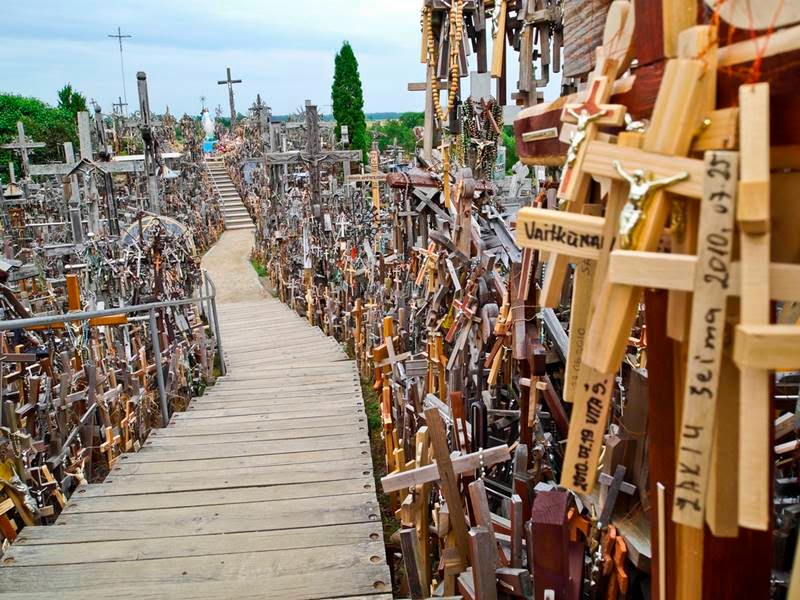
A Battle Waged with Art and Faith

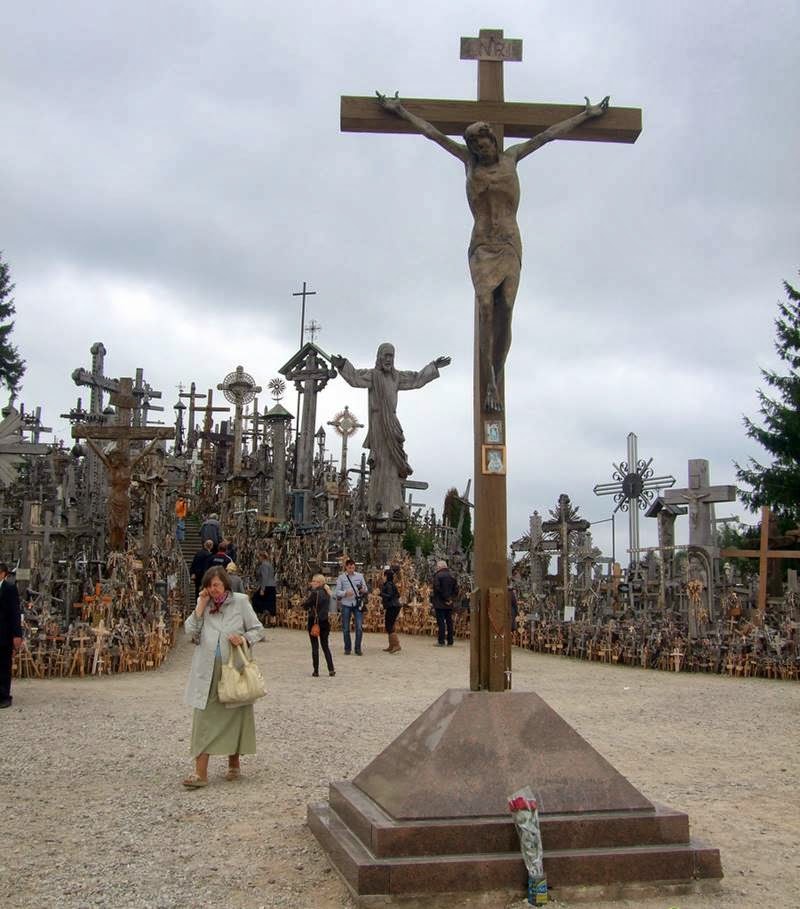
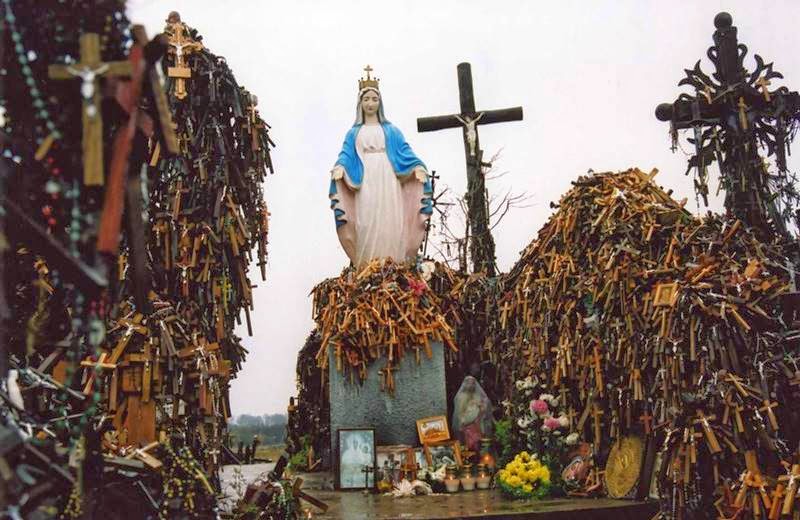
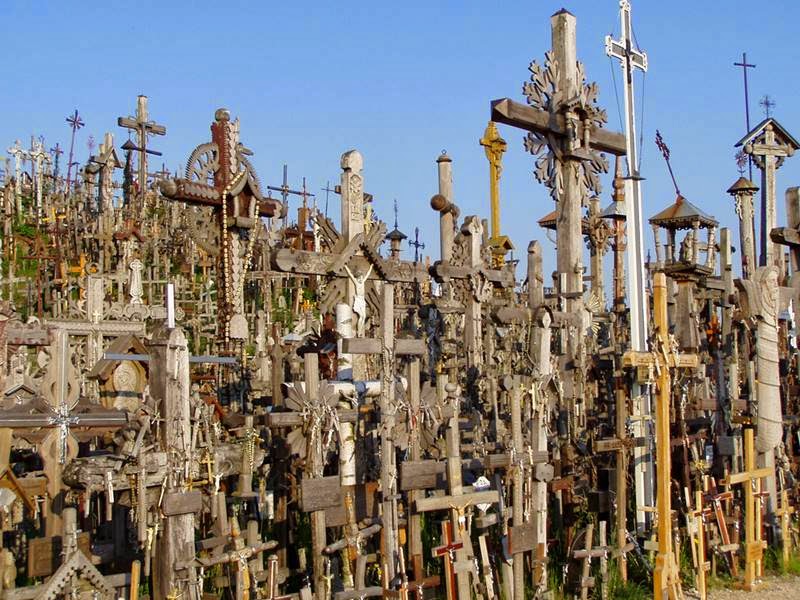
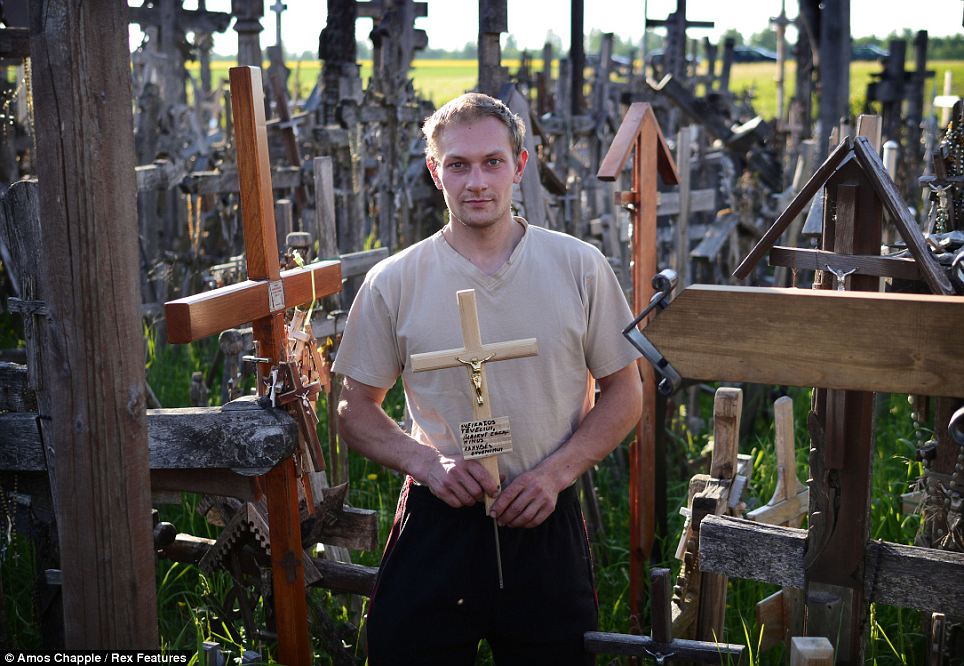
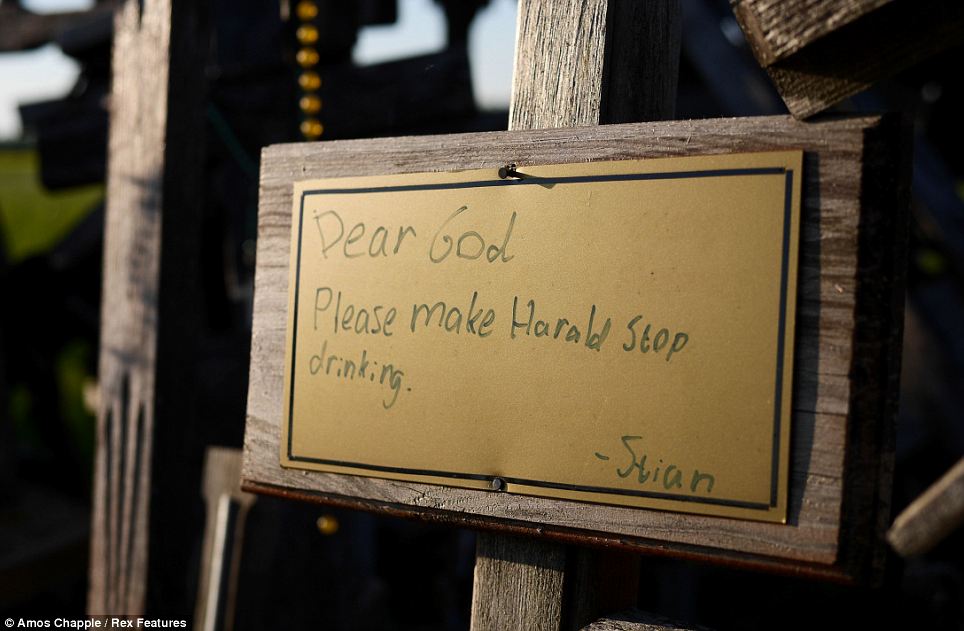
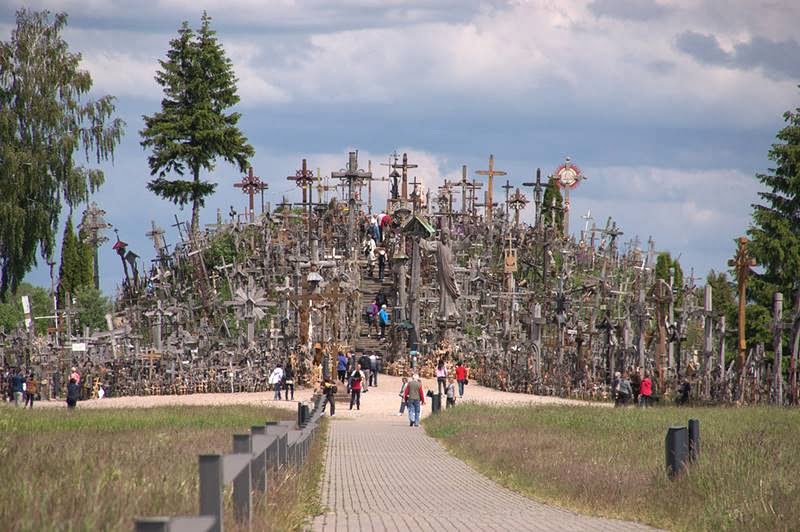
The Hill of Crosses, Kryziu Kalnas, in the city of Siauliai, Lithuania stands on a small hill, about 10 meters tall. The tradition of leaving crosses began after an uprising of the Polish and Lithuanians against the Russian tsar was squelched in 1831. Relatives of the dead rebels, with no bodies to bury, instead left crosses on this hill to commemorate their fallen.

Today there are about 200,000 crosses at the site, excluding carvings and shrines, made out of everything from wood to metal. During the Soviet occupation of Lithuania from 1944 to 1991, the Hill of Crosses became a symbol of defiance against the Communist regime.

Walking among numerous crosses, some decorated with devotion to loved ones, one can hear the rosaries rattle in the wind. This little hillock has long been a potent symbol of suffering, hope, devotion, and the undefeated faith of the Lithuanian people.

The Hill of Crosses  Lithuanian - Ritebook - 001

The Hill of Crosses  Lithuanian - Ritebook - 002

The Hill of Crosses  Lithuanian - Ritebook - 004

The Hill of Crosses  Lithuanian - Ritebook - 005

The Hill of Crosses  Lithuanian - Ritebook - 007

article-0-1A1F1BA0000005DC-509_964x707

article-2335159-1A1F1C34000005DC-439_964x666

article-0-1A1F1CA4000005DC-211_964x631

article-2335159-1A1F1DA4000005DC-703_470x611

John Updike on True Democracy

“There was a time when I wondered why more people did not go to church. Taken purely as a human recreation, what could be more delightful, more unexpected than to enter a venerable and lavishly scaled building kept warm and clean for us one or two hours a week and to sit and stand in unison and sing and recite creeds and petitions that are like paths worn smooth in the raw terrain of our hearts? To listen, or not listen, as a poorly paid but resplendently robed man strives to console us with scraps of ancient epistles and halting accounts, hopelessly compromised by words, of those intimations of divine joy that are like pain in that, their instant gone, the mind cannot remember or believe them; to witness the windows donated by departed patrons and the altar flowers arranged by withdrawn hands and the whole considered spectacle lustrous beneath its patina of inheritance; to pay, for all this, no more than we are moved to give—surely in all democracy there is nothing like it. Indeed, it is the most available democratic experience. We vote less than once a year. Only in church and at the polls are we actually given our supposed value, the soul-unit of one, with its noumenal arithmetic of equality: one equals one.”

(John Updike, “Churchgoing,” which appears in Pigeon Feathers and Other Stories, 1962)

Agnes Sanford, #jesusinqueens

Agnes Sanford was born in China, the daughter of a Presbyterian missionary. As an adult she made her home in New Jersey as the wife of an Episcopalian rector. She is known worldwide for her approach to healing through prayer—a process that is uncomplicated and very confident of God’s loving power to heal. She does not concern herself with complex questions of creed, denomination, or belief structure. Her approach is Christ-centered and church-centered. Throughout her life, she taught widely in many settings, and was the instrument of many healings.

Her most-acclaimed book, The Healing Light, has been in continuous publication since 1947, selling over half a million copies. In this book Sanford compares the power of God to the power of electricity—”the whole universe is full of it, but only the amount of it that flows through…will work.”

Her recommendations on how to pray are exceedingly practical and down to earth. She recommends that we conduct experiments in prayer not to put God to the test but to put our own wavering faith to the test. She knows that we are afraid to ask God for things because we are afraid of being disappointed. Her teachings have gently guided millions— over decades, continents, and worldviews— to exercise their faith in a simple yet disciplined way.

St.AgnesSanfordREV

(Artwork from the Dancing Saints Icon Project, S.F, CA)

Understanding #jesusinqueens

We live in a time where we want everything fast and easy—yeh, good, I got—next. Not just our media and our food but our ideas and the possibilities of ideas. Our soundbite culture makes it hard to step back and go, huh, hmmm. Um.

Oh.

This week is Holy Week. And for a lot of people that has great meaning and for a lot of people it has no meaning. For some it is a memory they’d rather forget, and for others something they are almost on the verge of leaning into.

#jesusinqueens gives us all a chance to see some things in a new way.  A bigger way. If you have 10 minutes to spare (and, preferably, a desk or laptop) I invite you to click here, to visit the Gallery, to take in all the faces, all the voices, all the ages and eras and styles. All the beauty and wisdom and power and joy.

#jesusinqueens is a story that’s been lived out through extraordinary women for two thousand years.

#jesusinqueens is a story that’s being rewritten in the lives of extraordinary women even as we speak.

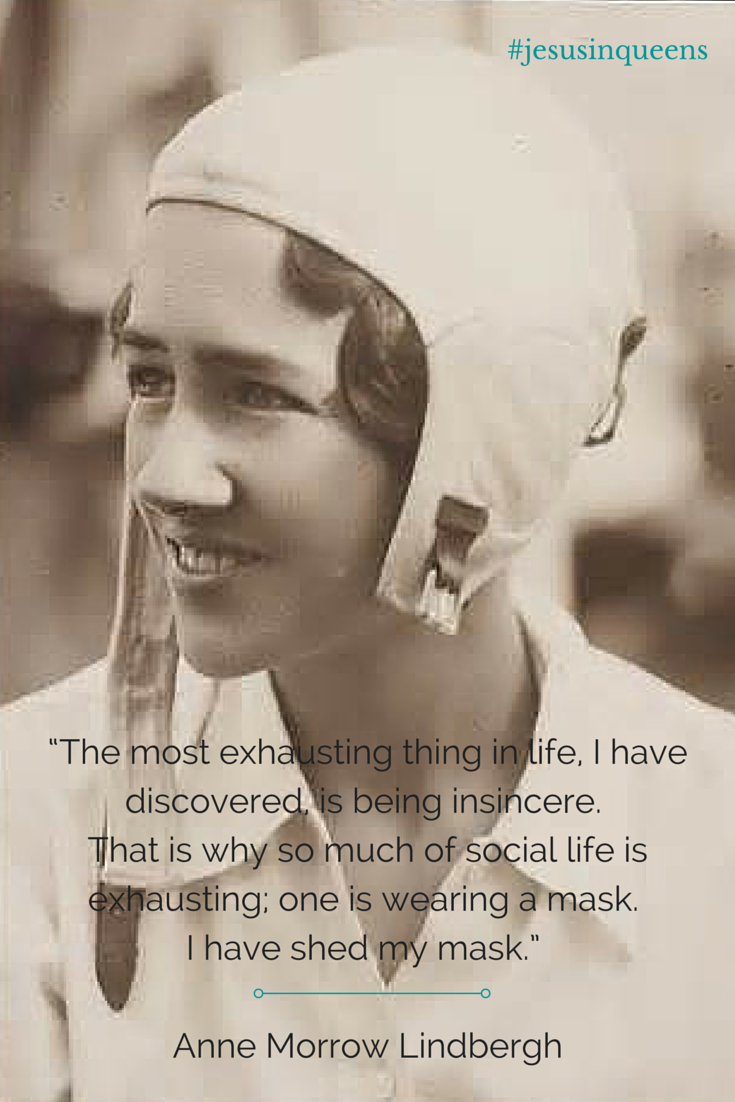
AnneMorrowLindberg