Homo Incurvatus in Se

I’m sitting on the couch with the TV on and my laptop open. I check my Facebook page, my school email, my home email, my blog dashboard. None of this is important. I check again. In the other room, my husband Lon sits at the dining room table which serves as his home office. He has two laptops and an iPad that he uses in rotation. He checks the surf, he scans new music and creative film clips for advertising. He downloads ebooks and reads popular series of fantasy fiction: Game of Thrones is his latest obsession. I check my Facebook. There is a message from my daughter, who is in the other room on her computer. She has made a play in our game of Words With Friends; the program lets me know it’s my turn to respond. I do, first to her word, then to my son’s. He lives in an apartment an hour away and we play online together; when he’s home for dinner or an overnight we play side by side, on dueling laptops, talking to other people, as we sit two feet away. We used to play Scrabble and Scattergories in a room, all together.

Homo incurvatus in se.

The first time I heard the term I was in a Bible study. Homo incurvatus in se, our young pastor said— an aside. I stopped him.

What? What did you just say?

Homo incurvatus in se. Man turned in on himself.

Augustine coined the phrase in the 5th century. Martin Luther resuscitated it a thousand years later. It is the best definition of sin I’ve ever heard. Look around. Never in the history of the world have the words Man Turned in on Himself been more apt. And never have we been more in denial about what that means, and the cost of it. The word sin— once recognized in all cultures and faiths as a given in the human condition— is hardly used outside of churches anymore. Even there it is often glossed over in favor of more appealing terms like grace and hope and love. Sin sounds archaic to our post-modern ears, which are protected by ear buds playing only what we want to hear, and laptops broadcasting only what we want to read or think about, 24 hours a day. But if we think by taking the word sin out of circulation, we have rendered it obsolete—some dusty old religious label for prigs and preachers—we’re kidding ourselves. The apostle John said it better: “If we say we have no sin, we deceive ourselves, and the truth is not in us.” (1 John 1:8)

The Entrance of Sin

Yes, there was a tree, and upon it, among the wax leaves, an order of fruit which hung plentifully, glazed with dew of a given morning. And there had been some talk off and on—nothing specific—about forgoing the inclination to eat of it. But sin had very little to do with this or with any outright prohibition.

For sin had made its entrance long before the serpent spoke, long before the woman and the man had set their teeth to the pale, stringy flesh, which was, it turns out, also quite without flavor. Rather, sin had come in the midst of an evening stroll, when the woman had reached to take the man’s hand and he withheld it.

In this way, the beginning of our trouble came to the garden almost without notice. And in later days, as the man and the woman wondered idly about their paradise, as they continued to enjoy the sensual pleasures of food and drink and spirited coupling, even as they sat marveling at the approach of evening and the more lush approach of sleep, they found within themselves a developing habit of resistance.

One supposed that, even then, this new taste for turning away might have been overcome, but that is assuming the two had found the result unpleasant. The beginning of loss was this: every time some manner of beauty was offered and declined, the subsequent isolation each conceived was irresistible.

—Scott Cairns, from Recovered Body, (Eighth Day Press)

This will be my Master’s Thesis work for the next year: this very real and current notion of a long forgotten Latin term.

Wish me well. Or if you are inclined to prayers, I will gladly take those.

Heather
In His time

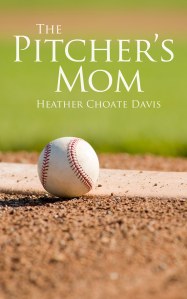
Eight years ago I was sitting on some dilapidated bleachers in a pile of weeds on the visitor’s side of the baseball field at University High. My son, Graham, who had been put on the varsity as a 13-year old freshman, was there; he played an inning or two in left field, as I recall. What I remember most about that day was the man standing by the fence clicking a stopwatch off and on as the baserunners went past. He was there for a reason, and it wasn’t to cheer on the Venice High baseball team.

Writers have a funny habit of trying to see things from 10,000 feet. Or in my case, from a little bit higher. And when you pair that curiosity with a maternal desire to do whatever is necessary to support your kid in doing the thing they love, well—— watch out. Down the bleachers I went, across the rocky dirt that led to the fence to stand beside him. “What are you doing?” I asked.

“Timing the baserunners,” he said, never taking his eye off the field, the watch, and back again. For the next half hour I asked him questions. About what made a good ballplayer, a good pitcher, about how someone could recognize those things. About what a player should do to get noticed, about how much was in their control. About schools and leagues and the level of play throughout the city. He never stopped timing. I never stopped probing. By the end of our chat, he pulled out a card and handed it to me. It read:

Artie Harris, L.A. Dodgers Scout, Draft Room Coordinator, Elite Team Coordinator.

“If you have any more questions,” Artie said, “Feel free to give me a call.”

A year later, I began writing “The Pitcher’s Mom,” and when I had a draft done, I called Artie to read it. He gave me notes on that draft and several others: we met at Maxwell’s in Venice over pancakes and eggs and we talked about baseball and my kids and his: his daughter, who was younger than me, was battling cancer. He and his wife were trying to keep their grandkids busy and happy and stable. I told him I would pray for them all. When I heard, later, through the grapevine that she had passed, I sent a note, but other than that we had not been in touch since my son graduated from high school.

Last year, when the movie Moneyball came out, I almost died laughing to see Artie and some of the other scouts we’d come to know in our time in the world of scout league baseball in Southern California. If you’ve seen the movie, you know that those scout scenes are pure gold, and Artie is one of the gems of the bunch. This week, when I knew that The Pitcher’s Mom was finally going to be released, I wrote him. Within a day he responded, offering whatever help he could, including this incredibly lovely and humbling quote:

“Heather Davis has a much better insight into the whole baseball process than almost any of the parents I’ve known over the last 50+ years. If you’re a mom with a kid in the game, and you want to look at the big picture, ‘The Pitcher’s Mom’ is the book you should be reading.”

There is a wonderful verse in the Bible that says “…all things work together for good for those who love God, who are called according to his purpose.” (Romans 8:28).

I cannot tell you how much delight it brings me to think about that funny little chat we had on a field so long ago, and how it helped to plant the first seeds that would lead to me writing this novel, and how now, it’s come full-circle with him playing a part in helping me promote it. If you have a chance to read the book, be on the look-out for a character based on Artie and our first stopwatch chat by the fence. It is one more moment that makes me smile as I am reminded— once again —that in God’s good economy, nothing is ever wasted.

(to order a copy of “The Pitcher’s Mom” just click on the title on the menu above)

Opening Day!

Well, the day has finally come! The book is now available for sale. To buy a copy, just click on The Pitcher’s Mom on the menu above: it’ll take you straight to the Amazon page. I hope you get a chance to read it, and share it with any baseball-loving moms and dads you might know. Please join me in praying it goes out in the world and connects with people.

Many thanks,

Heather

Faith is waiting

The reasons I haven’t been blogging much are twofold. Primarily, it’s because of school. Not that I can’t find a moment to jot down a few words, but because the nature of the studies and the desire I have to swallow them whole is making it difficult to imagine little bite-sized reflections on, say, whether or not I think Augustine or Pelagius or John Cassian got it right on original sin and good works. Or whether Constantine did more harm than good to the church, then and now. Or the beauty of icons and the sad human truth of schisms over what feels nothing like idolatry and everything like sacred art. At least to me. Since, as I progress in my theology studies, I tend to see things differently from week to week, and find myself forming ideas that the month before I didn’t even have the words to imagine, I think it’s best not to go on record with every passing thought. At least not yet.

The writer/actress/comedienne Susan Isaacs posted a great quote by Frederick Buechner yesterday:”Faith is different from theology because theology is reasoned, systematic, and orderly, whereas faith is disorderly, intermittent, and full of surprises… Faith is homesickness. Faith is a lump in the throat. Faith is less a position on than a movement toward, less a sure thing than a hunch. Faith is waiting.”

Which brings me to my second reason for being a preoccupied blogger lately. I was given a lovely gift a few weeks back in the form of an epiphany. Seven years ago I wrote a novel called The Pitcher’s Mom, based on all the years I’d spent around the game watching my son, Graham, and coming to understand the larger picture of what it is we hope for for our kids, and what it is they’re really meant to be and do, and how, as mothers, we help to navigate all that. It’s not a “true” story in the sense that it’s not my story, but it is a book that I believe will ring true to every mother who’s ever washed a Little League uniform. And perhaps, give us each a little peace as we envision all big dreams over the arc of a lifetime.

At the time, publishers—despite their fondness for it—wouldn’t take the risk. The numbers didn’t support it. Women, I was told, don’t buy books about baseball. Well maybe, I said, that’s because no one ever publishes baseball books from the woman’s point of view.

So now we have. Today you can click on the link above and read a sample chapter from The Pitcher’s Mom. By tomorrow, you can go to that same link and buy the actual eBook on Amazon for your Kindle. If you don’t own a Kindle you can download an app that will allow you to read it. You can also buy a copy and gift it to any baseball-loving moms in your life. I sure hope you do.

Until then, we continue our journey to Easter (and Opening Day), where each of us is given a clean slate and the promise of new life.


Home

I’ve been reading The Confessions by St. Augustine for class. I first read his work when I was putting together The Renaissance Service, the arts-based vespers that looked to the arts as a window to the divine. I remember learning about his mother, Monica, who wept as she prayed for her “prodigal” son; she was told by a bishop that is was “inconceivable that he should perish, a son of tears like yours.” Beautiful. Now I’m reading his work less with an eye to his conversion but the later formulations of his theology and doctrine. Still, woven in between the lines of his unrestrained mea culpas and his gifted rhetoric, there are prayer poems so sublime and gracious they seem to transcend all the other words.

This morning I came across this one. I hadn’t seen it in a decade but as I read the lines they felt as familiar as if I’d written them myself. Suddenly, I remembered why. I had used this prayer at the center point of one of the services, and chosen with care the man to read it. He was an actor—a lifelong grasper and wrangler and sparring partner of faith—who doesn’t simply read aloud but orates like the lead in the Shakespearean dramas he is so often asked to play. I can still hear his voice booming, breaking, in the candlelit dark as he read these words. Words written by St. Augustine over 1500 years ago, and which still bring comfort to weary and restless souls today…

O Lord our God,
grant us to trust in your overshadowing wings:
protect us beneath them and bear us up.
You will carry us as little children,
and even to our grey-headed age you will carry us still.
When you are our strong security, that is strength indeed,
but when our security is in ourselves, that is but weakness.
Our good abides ever in your keeping,
but in diverting our steps from you we have grown perverse.
Let us turn back to you at last, Lord, that we be not overturned.
Unspoilt, our good abides with you,
for you are yourself our good.
We need not fear to find no home again
because we have fallen away from it;
while we are absent our home falls not to ruins,
for our home is your eternity.

Pax
Heather

Painting: “Sunset” by Georges Roualt